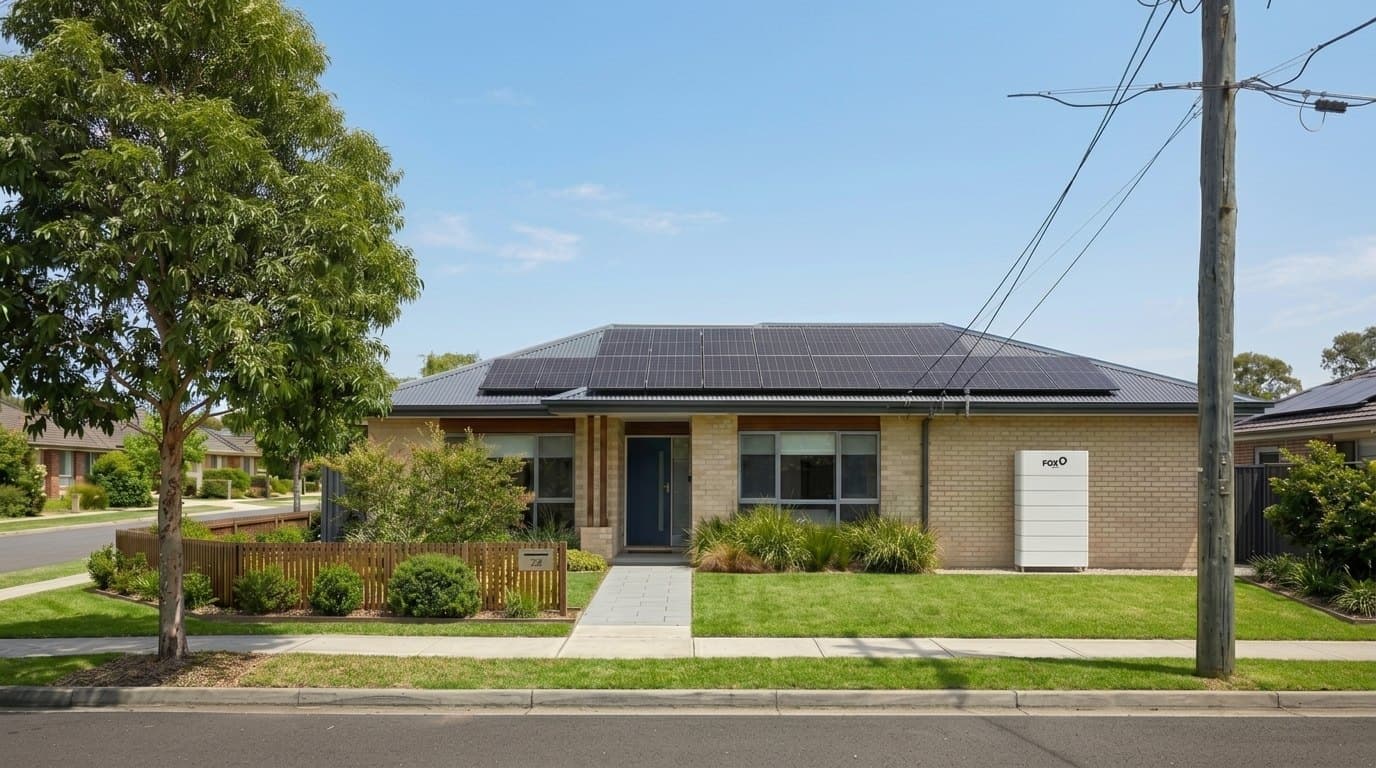
Charging an EV with solar and a home battery
How much power an electric car really uses each day, when to charge it from solar, the grid or a home battery, and when more panels beat a bigger battery.
Solar9 min read
By the Sunnn design team

The short version
- The average Australian drives about 33 km a day. In a car like a Tesla Model Y, that is very roughly 5 to 6 kWh of electricity.
- The cheapest place to get it is your own spare solar, straight into the car in the middle of the day. A smart charger can follow your solar for you.
- Charging the car from your home battery at night is usually a poor use of the battery: it empties it before the evening peak and loses about 10% on the way.
- If the car is home during the day, more panels usually help more than a bigger battery. If it is gone all day, off-peak grid or a larger battery come back into play.
How much power does an electric car actually use?
Less than most people expect. According to the government's energy site, energy.gov.au, the average Australian drives about 33 km a day. That is a modest amount of energy, which is why solar can cover a lot of it.
Electric cars are measured in kilowatt hours (kWh), the same unit on your power bill. The government's Green Vehicle Guide lists how much each electric car uses in its official lab test. The 2025 Tesla Model Y, a mid-size electric SUV, is listed at 158 to 162 watt hours per km. That is about 16 kWh for every 100 km.
So, very roughly:
- 33 km a day x about 0.16 kWh per km = about 5 to 6 kWh a day.
- Across a week of average driving, that is somewhere around 37 kWh.
Your own number will differ: lab figures are for comparing cars, real use changes with speed, hills and air conditioning, and bigger SUVs and utes use more. Check your car on the Green Vehicle Guide or its trip computer.
Your four options for charging at home
When to charge the car across a day
| Where the power comes from | When | What it really costs you |
|---|---|---|
| Your spare solar, straight into the car | Middle of the day | The small feed-in tariff you would have been paid for exporting it |
| Solar Sharer free window (NSW, South East Qld, SA) | 11am to 2pm, or 12pm to 3pm in SA | Free up to 24 kWh a day, but you pay the plan's rates outside the window |
| The grid, off-peak | Usually overnight | Your plan's off-peak rate, if it has one |
| Your home battery | Evening or overnight | The solar you stored, about 10% lost on the way in and out, and a battery that is no longer full for the evening |
Charging from solar in the day
energy.gov.au's advice is simple: if you have rooftop solar, charge while the sun is shining. Every kWh that goes straight from the panels into the car is one you did not buy from the grid, and it only costs you the feed-in tariff you would have earned by exporting it, which is small (here is why).
How much solar does an EV need? energy.gov.au says 1 kW of panels makes, averaged over a year, about 3.6 kWh a day in Melbourne, 4.0 kWh in Sydney and 4.2 kWh in Brisbane and Adelaide. More in summer, less in winter. So covering 5 to 6 kWh of driving takes very roughly 1.5 kW of panels on an average day, on top of what the house already uses. Allow more for winter and cloudy days.
The catch is the charger. A dedicated single-phase home charger can pull around 7 kW. A 6.6 kW solar system can never have 7 kW spare, especially with the house running too, so a plain charger simply tops up the difference from the grid. A smart charger (sometimes called solar-aware) fixes this. energy.gov.au describes them as "set and forget": they charge when power is cheapest or when your solar is making more than the house needs, slowing down to match what is spare. On cloudy days, look for one that lets you choose between solar only and a top-up from the grid.
Even a normal power point helps. energy.gov.au says a standard power point delivers up to 2.4 kW. Over five sunny hours that is up to 12 kWh, about two days of average driving, and a slow charge like that fits under a modest solar surplus nicely.
The honest limit: solar only reaches the car if the car is at home when the sun is up. If you work from home, have a second car that stays put, or can plug in on weekends, this works well. If the car leaves at 7am and gets back at 6pm, it mostly does not.
Should you charge your EV from your home battery?
Usually not. Storing solar in the day and putting it in the car at night sounds neat, but it is rarely the best use of a home battery.
- It empties the battery before the evening. On a time-of-use plan the evening peak is when grid power costs the most, and covering it is the battery's main job. If a 10 kWh battery sends 5 to 6 kWh into the car, only about half is left to run the house.
- Energy is lost on the way through. energy.gov.au says a lithium-ion battery typically loses about 10% of the energy stored in it as it charges and discharges. Solar that goes straight into the car avoids that loss.
- It adds wear. Battery life is measured in years, cycles or total energy passed through it. Running the car through the battery uses up that allowance faster.
A better pattern for most homes: charge the car and the battery from solar in the day, run the house from the battery in the evening, and top the car up off-peak overnight if it still needs more. Ask for the charger and battery to be set up so the car cannot drain the battery unless you choose to.
The exception: a car that is only ever home at night, plus plenty of spare solar. Then sizing the battery with the car in mind can make sense (how big a home battery do you need?).
Off-peak grid and the Solar Sharer
If the car is only home at night, charging from the grid overnight is often fine. energy.gov.au suggests avoiding peak times and using off-peak rates where your plan has them.
In NSW, South East Queensland and South Australia there is another option. The Solar Sharer Offer is an optional plan that gives eligible households three hours of free electricity every day: 11am to 2pm in NSW and South East Queensland, and 12pm to 3pm in South Australia, up to 24 kWh a day. You need a smart meter, and the government lists EV chargers and home batteries among the things worth running in that window. A 7 kW charger running for the full three hours adds about 21 kWh, roughly 130 km in a car using 16 kWh per 100 km.
It is not free power all day: you still pay the supply charge and the plan's rates outside the window, so compare the whole plan before switching. And the car has to be plugged in at midday.
On a wholesale plan the price moves through the day, so a smart charger can be set to charge in the cheap hours. It is the same idea behind how Sunnn sets up wholesale-ready batteries: buy when power is cheap, and save the battery's charge for when the price is high.
Single-phase or three-phase charger?
Most Australian homes have single-phase power. AGL's guide puts a single-phase home charger at about 7 kW, around 42 km of driving range per hour of charging in its example car. Three-phase homes can run 11 kW or 22 kW chargers, though AGL notes some cars can only take 11 kW from an AC charger, so a 22 kW unit is wasted on them.
For 33 km a day, 7 kW is plenty: it replaces a day's driving in under an hour. A dedicated charger must be installed by a licensed electrician and, energy.gov.au notes, may need a switchboard or supply upgrade. For solar charging, your spare solar sets the pace anyway, not the charger.
More solar or a bigger battery?
- The car is home in the day often: more panels usually win. Panels make new energy every day. A battery only moves energy you already have, and if there is no spare solar, a bigger battery has nothing to fill it with.
- The car is gone all day, every weekday: solar cannot reach it directly. Your choices are weekend solar top-ups, off-peak grid overnight, the Solar Sharer if the car is home at midday, or a battery sized for the house and the car together, accepting the 10% loss.
- Your roof is already full: then a smart charger, a sensible plan and possibly a larger battery are where the gains are. Weigh that against whether a home battery is worth it for your evenings, which is still its best job.
Next step
The quickest way to see your own numbers is the savings calculator. For a proper design, check your eligibility. Tell us what you drive and when the car is at home, and we will size the solar and battery with it in mind, then arrange installation through accredited installers. Savings figures are modelled estimates, not guarantees.
Common questions
How much solar do I need to charge an electric car?
The average Australian drives about 33 km a day. In a car using about 16 kWh per 100 km, that is roughly 5 to 6 kWh a day. With 1 kW of panels making about 3.6 to 4.2 kWh a day in most capital cities, averaged over a year, that is very roughly 1.5 kW of panels on top of what your house uses, more for winter. It only works if the car is plugged in while the sun is up.
Should I charge my EV from my home battery?
Usually not. It empties the battery before the evening peak, when grid power costs the most on many plans, and a lithium-ion battery typically loses about 10% of the energy going in and out. It is usually better to charge the car from solar during the day or off-peak overnight, and keep the battery for the house.
Can I charge an EV from a normal power point?
Yes. A standard power point delivers up to 2.4 kW, which is slow but can cover average daily driving, especially if the car is plugged in for long periods. Over a sunny middle of the day it can soak up spare solar well. A dedicated charger is faster and can be set to follow your solar.
Do I need a three-phase EV charger?
Most homes do not. Most Australian homes have single-phase power, and a single-phase home charger runs at about 7 kW, which replaces a typical day's driving in under an hour. Three-phase chargers run at 11 or 22 kW, but some cars can only take 11 kW from an AC charger.
Sources
- energy.gov.au: How to charge your electric vehicle
- Green Vehicle Guide: 2025 Tesla Model Y
- energy.gov.au: Solar panels
- energy.gov.au: Batteries
- energy.gov.au: Solar Sharer Offer
- AGL: EV chargers and electricity supply explained
General information only, not financial advice. Rebates and market rules change; check the sources above for the current position. Any savings figures are modelled estimates, not guarantees. See our disclosures.